
Market Stuck in Unstable Equilibrium
Global Economy Seeks Balance Amid Conflict and AI Boost
The Flash Purchasing Managers Indices (PMIs) for the current month have provided a snapshot of the global economy's performance after almost two months of conflict in the Middle East, followed by a fragile ceasefire. The data reveals a mixed bag, with some countries experiencing a rebound in private sector activity, while others continue to face challenges.
In the US, the UK, India, Japan, and Australia, the private sector has seen a rebound in activity, with the Eurozone being the odd man out. However, even in Europe, the Manufacturing PMI hit a 47-month high, with the downturn being in the services sector. This seeming resilience may be attributed to pre-emptive stocking, an early sign of stress being deferred, rather than demand-driven growth.
The US Flash PMI for April has been attributed to the building of safety stocks, with survey respondents reporting "panic" and "emergency" buying ahead of price hikes and supply shortages. Similarly, the Flash India PMI indicates that firms are building buffer stocks to manage the uncertainties around the longevity of the supply-side shock.
Read also: Forex Reserves Increase by $2.362 Billion to $703.308 Billion
The flip side of this stockpiling is already visible: a broad-based rise in input costs and inflation, as firms rush to secure supplies ahead of potential disruptions. The India PMI survey has reported the second-steepest rate of input cost inflation in close to three years.
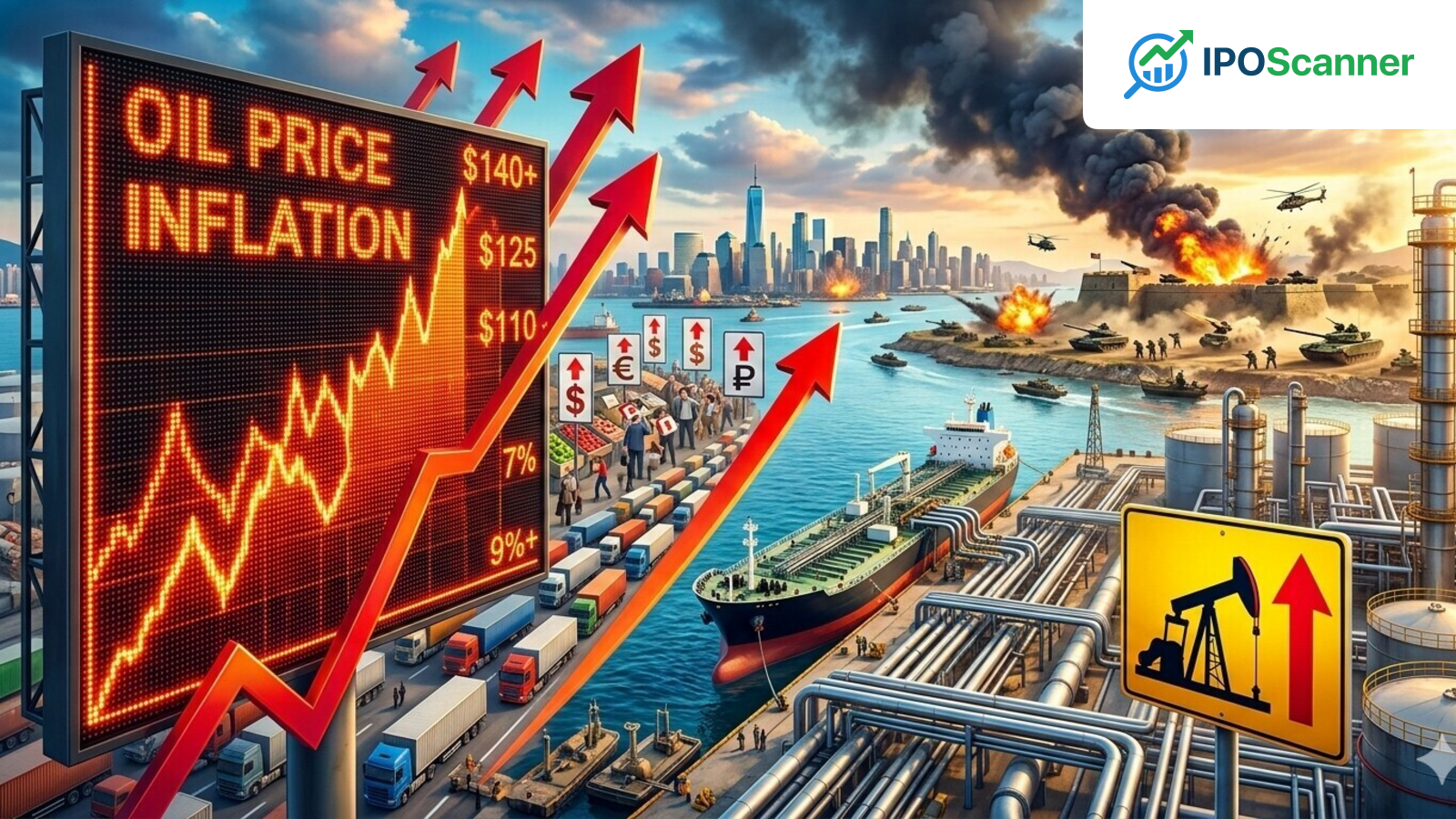
The global economy's reliance on the Strait of Hormuz, which remains closed, continues to pose a significant threat. Brent crude prices have rebounded to over $100 a barrel, putting pressure on countries like India. The RBI Bulletin has warned that if the conflict persists and supply chains are not restored early, it may create challenges to the domestic economy in the form of higher energy costs, input cost pressures, disruption in trade flows, and financial market spillovers.
| Country | MSCI Index | Performance (Year-to-Date) |
|---|---|---|
| MSCI All Country World Index | 5.19% | |
| MSCI India | -5.12% | |
| MSCI China | -4.19% | |
| MSCI Korea | 62.63% | |
| MSCI Taiwan | 33.73% |
The MSCI All Country World Index is still up 5.19% this year, but the overall figure hides big differences in country performances. MSCI India and MSCI China are down 5.12% and 4.19%, respectively, both of which depend on the Strait of Hormuz for their oil imports.
In contrast, MSCI Korea and MSCI Taiwan are up 62.63% and 33.73%, respectively, mainly due to their participation in the AI revolution. Markets like South Korea and Taiwan are not just outperforming, they are being lifted by a different kind of support: the surge in AI-driven demand, which is offsetting global uncertainties.
For economies like India, however, there is no such offset. An HSBC research report has upgraded Korea to "neutral" and moved India to "underweight," reflecting this trend. The report suggests that supportive domestic flows and strong earnings led by AI-driven demand underpin the Korea outlook, while potential inflation and demand pressures are likely to impact earnings growth in India.
The resilience of the Indian consumer remains a crucial factor, but the looming threat of El Niño may keep supply volatile in FY27, delaying a full recovery cycle. The Indian consumer's ability to play the role of Dickens' Mr. Micawber, perpetually hopeful that "something will turn up," is the big question.
Even as some parts of the global economy are being lifted by AI, for others, particularly IT services, it represents not a cushion but a disruption. The HCL Tech management has stated that close to 40% of a normal IT service company's revenue is disrupted by AI. Infosys, like many other IT service players, is negotiating a tough operating environment where a difficult macro is meeting an unprecedented technological shift.
The story of the global economy may easily change when the shock absorbers, such as inventory, policy, optimism about AI, and domestic inflows into equities, begin to wear thin.
Investor Takeaway
Investors should be cautious of the potential for stress being deferred in the market.
More in Economy

Forex Reserves Increase by $2.362 Billion to $703.308 Billion
US-Iran Tensions to Exacerbate Fuel Price Volatility, Present Opportunities for Stock Market Investors
Investors Weigh Potential Shift in Power Stock Market Trends