India Looks to Rekindle Buyback Activity Following Policy Overhaul
India Inc. Poised for Fresh Share Buyback Cycle
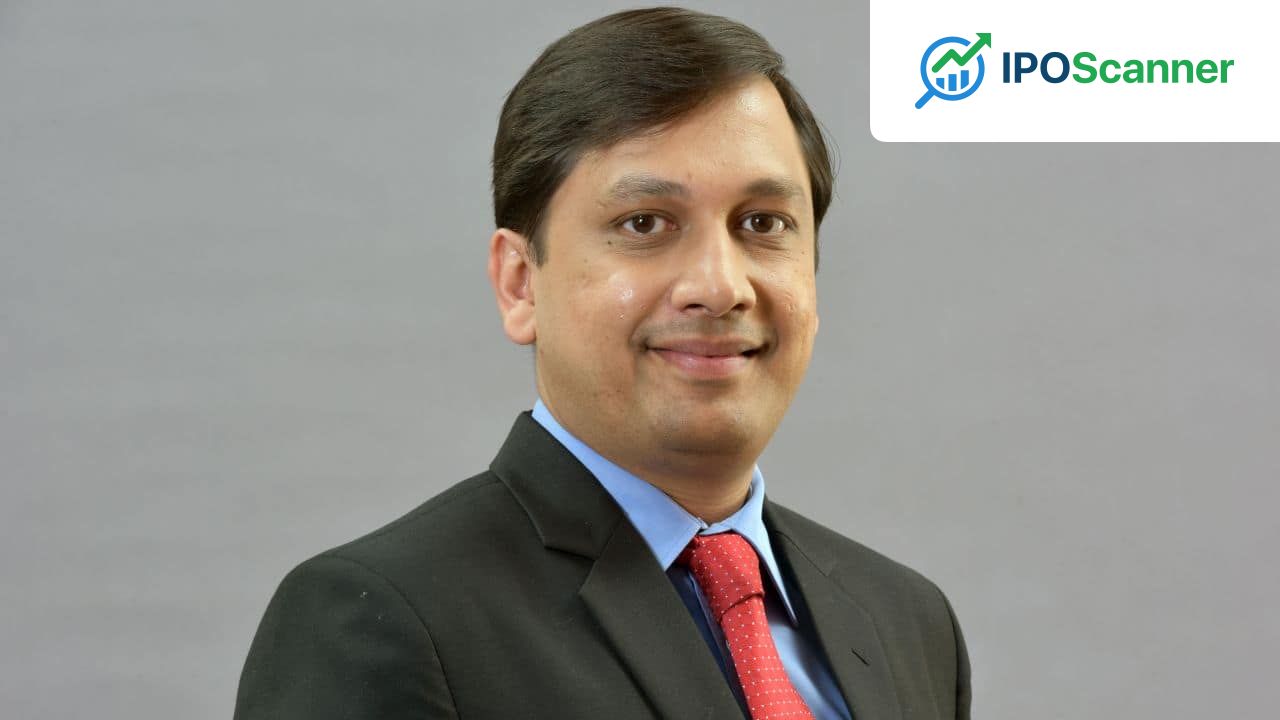
India's corporate sector may be on the cusp of a new share buyback cycle, thanks to a favorable combination of tax changes, strong corporate balance sheets, and supportive valuations in the current market landscape. Pankaj Tibrewal, a senior executive at Ikigai Asset Manager, believes that the conditions are now in place for a revival after last year's policy changes.
A fresh buyback cycle would be a welcome development, given the sector's strong cash flow and balance sheet strength. According to Tibrewal, the current market landscape is conducive for buybacks, with several sectors trading below their 10-year average forward multiples. For instance, Consumer Staples are trading at 39.6, compared to their 10-year average of 49.9, while Communication Services are trading at 24.1, compared to their 10-year average of 38.7.
| Sector | Current Valuation | 10-Year Average Valuation |
|---|---|---|
| Consumer Staples | 39.6 | 49.9 |
| Communication Services | 24.1 | 38.7 |
Read also: April Ceasefire Lifts BSE SMID 400 Back to Pre-Conflict Level of 12,000
The tax regime has been a major factor in the previous decline in buybacks. However, the recent Budget 2026 has shifted buybacks back to a capital gains framework, with a 12.5% Long-term Capital Gain applicable only on net gains. This brings the effective tax to roughly 5.3% of gross proceeds, making buybacks a more attractive option for companies.
The tax differential between dividends and buybacks is now significant. On a Rs 100 payout, a minority investor would retain about Rs 94.7 through buybacks, compared with Rs 64.1 via dividends. Even for promoters, buybacks remain more efficient, with post-tax proceeds of Rs 85 for corporate promoters and Rs 79 for non-corporates, versus Rs 61 under dividends.
Early signs of a revival are already visible, with several companies announcing buybacks. Wipro has announced a Rs 15,000 crore buyback, while Aurobindo Pharma, Windlas Biotech, and Jagsonpal Pharma have also announced buybacks. Others such as Rolex Rings, Cyient, and Sarla Performance Fibres are expected to follow.
Regulatory tailwinds are also supporting the revival of buybacks. The Securities and Exchange Board of India (SEBI) is consulting on reintroducing open market repurchases (OMR), which would allow companies to buy back shares over an extended period rather than through one-time tender offers. This could improve price support, signal undervaluation more effectively, and provide greater flexibility in capital deployment.
Read also: Nissan Motor India, Avis India Collaborate on Leasing and Subscription Services
However, there are also risks associated with the revival of buybacks. A macro slowdown could compress free cash flows, limiting companies' ability to execute buybacks. Regulatory uncertainty remains, given SEBI's history of tightening rules. Promoter holding limits near 75% could constrain participation for some companies. There is also the risk of capital misallocation if buybacks are conducted at elevated valuations, as well as the possibility of future tax reversals.
If the cycle does play out, the impact on earnings could be meaningful. Tibrewal estimates that annual buybacks of Rs 1 lakh crore could add around 80 basis points to EPS growth for Nifty 50 companies (excluding financials) over FY27-FY28, over and above an underlying 15.6% PAT CAGR. More aggressive scenarios could amplify this effect further.
The core thesis of Tibrewal's thoughts highlights the impact of buybacks as a compounding engine. By reducing the number of outstanding shares, buybacks mechanically boost earnings per share (EPS), even without underlying profit growth. A 10-year simulation assuming 5% PAT CAGR and periodic buybacks of 5% every two years shows EPS growing 2.1x with buybacks versus 1.6x without them. That is roughly 30% incremental boost purely from capital allocation.
Global evidence suggests that buybacks have become the dominant form of capital distribution in the US. S&P 500 companies returned over $1 trillion via buybacks in 2025, with around 45% of US companies using buybacks, compared with ~30% paying dividends. This is a reversal from 1980, when buybacks were negligible.
Case studies of companies such as Apple and AutoZone demonstrate the effectiveness of buybacks in driving EPS growth. Apple has spent about $800 billion on buybacks since 2010, reducing its share count by 42% and driving EPS growth at 1.5x the pace of profit growth. Without buybacks, its 2025 EPS would have been 55% lower.
Investor Takeaway
India Inc. may see a fresh share buyback cycle following policy changes.
More in Market
April Ceasefire Lifts BSE SMID 400 Back to Pre-Conflict Level of 12,000

Nissan Motor India, Avis India Collaborate on Leasing and Subscription Services

Foreign Institutional Investors Net Sell Indian Equities Worth Rs 3,255 Crore, Domestic Institutional Investors Net Buy Rs 941 Crore