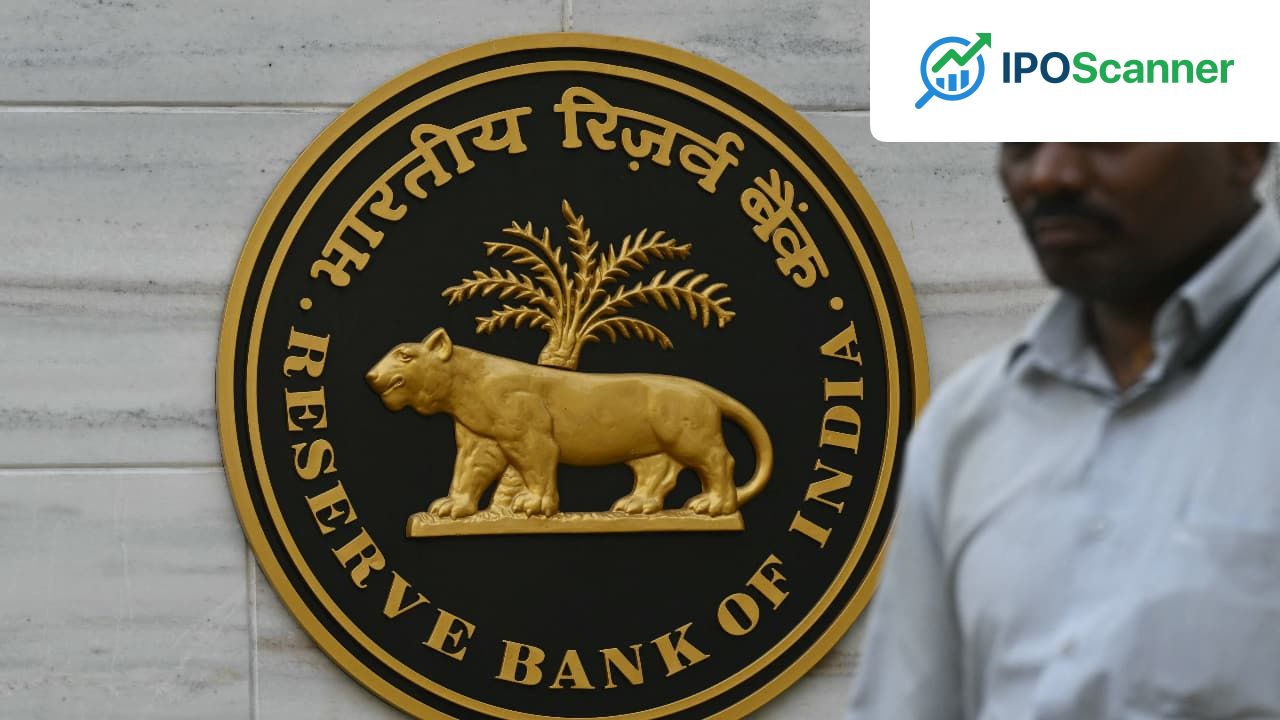
RBI Deputy Governor Poonam Gupta Sees Ongoing Support for Growth Amid Conflict and Trade Tensions
Reserve Bank of India Deputy Governor Poonam Gupta Maintains Optimism on Growth Amid Geopolitical Tensions
Reserve Bank of India (RBI) Deputy Governor Poonam Gupta said the central bank remains in a "watch and wait" mode on inflation risks, while retaining optimism on growth despite ongoing geopolitical tensions, according to an interview with The Economic Times.
Gupta stated that the RBI's base-case assumption is that the conflict will be resolved in a few months, with supply chains being restored subsequently and demand-supply normalising thereafter. For now, there is no evidence of second-round effects unanchoring inflation expectations.
India's growth outlook remains constructive because economic outcomes have repeatedly surprised on the upside in recent years. Gupta noted that negative shocks may have been frontloaded early in the fiscal year, while positive developments could emerge later through a potential India-US trade deal, easing of the West Asia conflict, and gains from recent trade and investment agreements. The economy currently has spare capacity rather than supply-side constraints, which could help absorb stronger domestic or global demand.
Read also: SAIL Secures Court Injunction in Steel Industry Antitrust Investigation
The RBI's base-case assumption is that tensions would ease within a few months, allowing supply chains to gradually normalise. Under that scenario, the sharpest drag on growth would likely be seen in the first half of the fiscal year, followed by a recovery in the second half.
Addressing inflation, Gupta stated that when price pressures are driven by temporary supply shocks, central banks often "look through" them unless inflation becomes entrenched. As of now, there is no evidence of second-round effects on inflation expectations becoming unanchored; therefore, the RBI has decided to watch and wait.
| Scenario | Growth Impact |
|---|---|
| First half of the fiscal year | Sharpest drag on growth |
| Second half of the fiscal year | Recovery |
Only part of higher energy prices has so far been passed on to consumers in India, with the rest absorbed by the government, limiting broader inflation spillovers. Gupta noted that India is relatively less vulnerable to a wage-price spiral than many advanced economies because wage adjustments happen with a longer lag and inflation-linked wage bargaining remains limited.
Read also: India's Energy Transition: A New Frontier for Deep Tech Startups
On the inflation-targeting framework, Gupta stated that India's 2016 shift has improved transparency, anchored expectations, and reduced both the level and volatility of inflation. The tolerance band around the 4% target has given policymakers flexibility to respond to shocks such as Covid, the Russia-Ukraine war, and recent global disruptions.
Regarding monsoon risks, Gupta stated that the RBI had assessed the possibility of El Niño-linked rainfall shortfalls. A deficiency of around 7-9% is unlikely to significantly hurt agriculture, she cited stronger irrigation, storage, mechanisation, and climate-resilient farming practices.
Gupta noted that El-Nino is unlikely to have a significant impact on agriculture as the sector has become more resilient to shocks.
Investor Takeaway
Investors should remain optimistic about India's growth outlook despite ongoing geopolitical tensions.
More in Economy

SAIL Secures Court Injunction in Steel Industry Antitrust Investigation

India's Energy Transition: A New Frontier for Deep Tech Startups

India's Consumption Plays Key Role in Sustaining Economic Growth, Predictable Support Crucial for GDP Expansion: FM Sitharaman