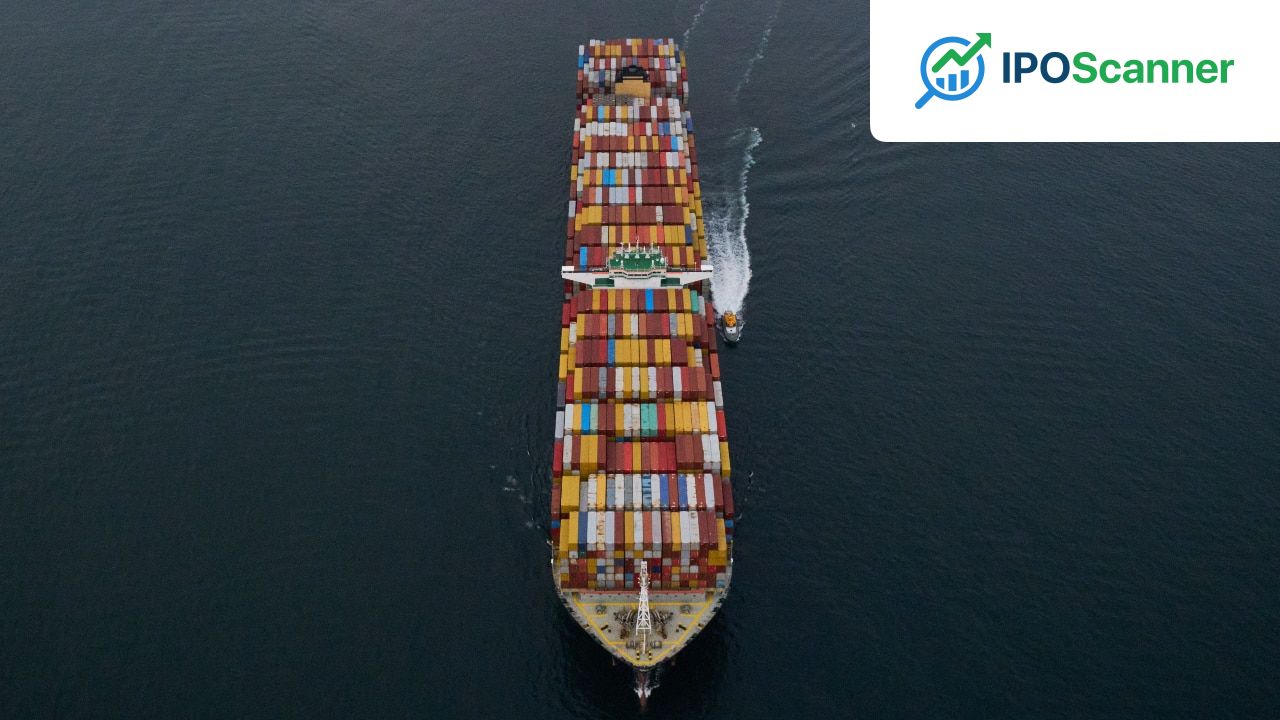
Indian Ports Handle Record 915.17 Million Tonnes of Cargo in Fiscal Year 2026
Indian Ports Exceed Annual Cargo Target
Major ports in India have collectively handled 915.17 million tonnes of cargo in the 2025-26 fiscal year, surpassing the annual target of 904 million tonnes, according to Union Minister Sarbananda Sonowal. This achievement marks a year-on-year growth of 7.06 per cent, highlighting the sector's strong recovery, enhanced efficiency, and sustained growth trajectory.
During the 2025-26 fiscal year, the overall capital expenditure (capex) by the Shipping Ministry and its attached organisations stood at Rs 14,953 crore, a significant increase from Rs 9,708 crore in the previous year. This substantial investment has enabled the addition of 94 ships to the Indian Flag, with a total Deadweight Tonnage (DWT) of 25.67 lakh, compared to 45 ships with 7.72 lakh DWT in the 2024-25 fiscal year.
The 12 major ports wholly-owned by the central government and governed by the Major Port Authorities Act, 2021, have been instrumental in this achievement. These ports include Deendayal Port, Mumbai Port, Jawaharlal Nehru Port, Mormugao Port, New Mangalore Port, Cochin Port, V.O. Chidambaranar Port, Chennai Port, Kamarajar Port, Visakhapatnam Port, Paradip Port, and Syama Prasad Mookerjee Port.
Read also: Government Sets Aside Higher Allocation for Telecom Tech Development Fund by October
India's progress in the sea-going workforce has been notable, with the number of Indian seafarers nearly tripling in the last 12 years. Today, India ranks among the top three countries as a seafarer provider, contributing roughly 12 per cent of the global maritime workforce. The government aims to increase this share to 20 per cent by 2030.
In addition to expanding the global share of seafarers, the government is also focusing on skilling and developing maritime professionals for shore-based jobs. The scope of maritime education is being expanded into emerging and interdisciplinary domains to meet the growing demands of the sector.
With a coastline of over 11,098 kilometres, 111 National Waterways, and a strategically advantageous position on major global trade routes, India is well-positioned to become a leading maritime nation. The Maritime India Vision 2030 and Maritime Amrit Kaal Vision 2047 outline the country's long-term ambition to establish itself as the top maritime nation in the next 21 years.
The Blue Economy is a key component of India's maritime strategy, which focuses on the sustainable and responsible utilisation of ocean, coastal, and marine ecosystems to drive economic growth, generate livelihoods, and ensure environmental protection. This encompasses a wide range of sectors, including fisheries, maritime transport, offshore renewable energy, marine biotechnology, and coastal tourism. Sustainability remains a central pillar of India's maritime strategy.
Read also: Uttar Pradesh Government Initiates GPS-Based Sugarcane Crop Survey to Enhance Farmer Support
| Year | Cargo Handled (MT) | Year-on-Year Growth |
|---|---|---|
| 2024-25 | 854.11 | - |
| 2025-26 | 915.17 | 7.06% |
More in Economy

Government Sets Aside Higher Allocation for Telecom Tech Development Fund by October
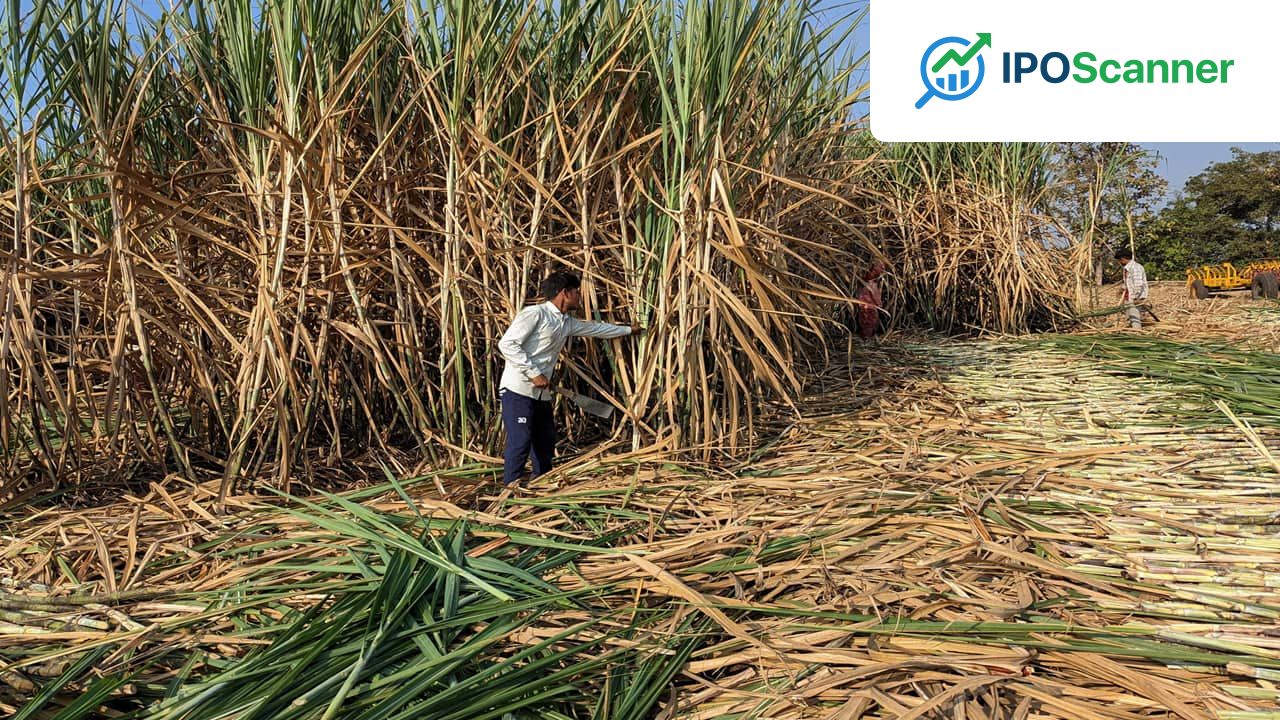
Uttar Pradesh Government Initiates GPS-Based Sugarcane Crop Survey to Enhance Farmer Support
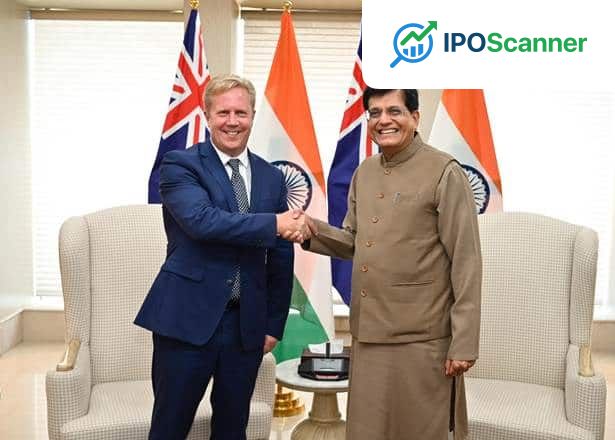
India, New Zealand Set to Sign Free Trade Agreement on April 27, Doubling Trade to $5 Billion in Five Years