Investing Rs 1 Crore: Insights from Recent Sensex Trends
Detailed Analysis
Timing the Market: A Recipe for Disaster
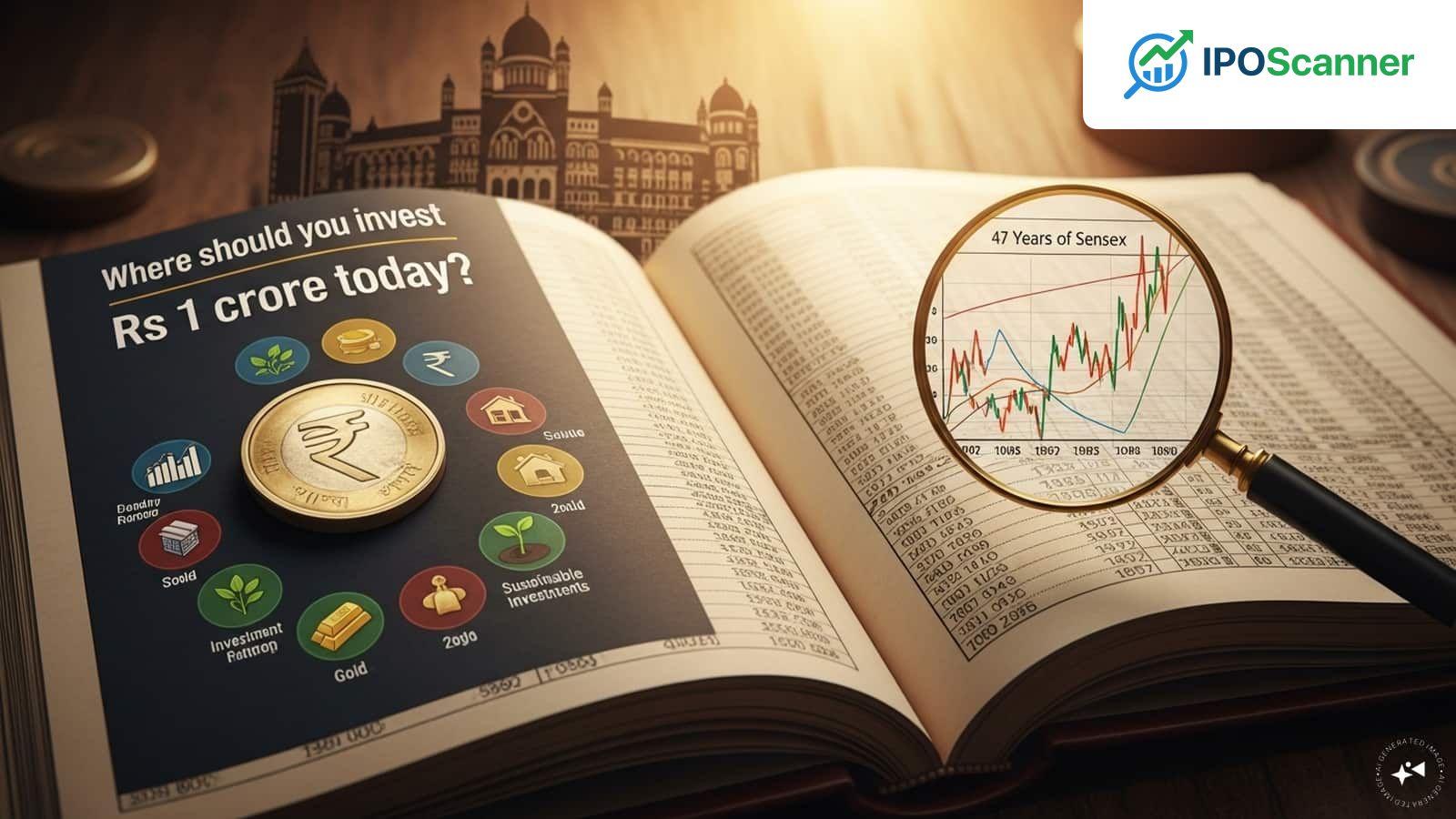
Over four decades of market fluctuations, one crucial lesson has emerged: investing in equities over the long term yields better returns than trying to time the market. This fundamental principle is evident in the 47-year history of the BSE Sensex, which has witnessed boom years, global crises, and India-specific shocks.
The Sensex Report Card
Launched in April 1979 at a base of 100 points, the BSE Sensex has closed at 85,220.60 as of December 31, 2025, marking a significant journey through liberalisation, dot-com bubbles, the Global Financial Crisis, demonetisation, a pandemic, and geopolitical upheavals. Despite these challenges, the Sensex has consistently demonstrated its ability to recover from downturns.
| Year | Sensex Value | | --- | --- | | 1979 (April) | 100 | | 2008 (low point) | 39,400 | | 2009 (recovery) | 17,300 | | 2020 (COVID-19 low point) | 24,300 | | 2025 (December) | 85,220.60 |
Key Takeaways from the Data
Investors who panic-sold in 2008, when the Sensex fell 52.5 percent, missed the extraordinary 79.7 percent recovery of 2009. Similarly, those who stayed invested through the COVID crash of March 2020 were rewarded with a near-complete recovery within the same calendar year.
Asset Allocation: The Key to Success
Market conditions remain uncertain due to volatility in crude oil prices and geopolitical tensions. However, asset allocation can help investors navigate these challenges. Wise Finserv's Ajay Kumar Yadav recommends a hybrid approach combining debt, equity, and commodities to achieve a better risk-reward balance.
| Asset Class | Recommended Allocation | | --- | --- | | Domestic Equities | 50% | | Global Equities | 10-15% | | Gold/Silver ETFs | 5-10% | | Real Estate | 10-12% | | High-Quality Debt | 10-15% |
Systematic Transfer Plans: A Smooth Investment Experience
Mohit Bagdi of MIRA Money suggests using a systematic transfer plan (STP) to invest a large sum like Rs 1 crore. This involves gradually shifting funds from liquid assets to equities over a period of 3-4 months, reducing timing risk and achieving better risk-reward balance.
The Power of Compounding
Over 10 years, an investment of Rs 1 crore can grow significantly, depending on the level of risk taken. A conservative approach with a higher share in fixed deposits may yield around 7.5 percent annually, taking the total corpus to about Rs 2.06 crore. A balanced or recommended mix, delivering roughly 12 percent returns a year, could grow the investment to nearly Rs 3.11 crore over the same period. Meanwhile, a more aggressive, equity-heavy strategy with an assumed 15 percent annual return has the potential to build a corpus of about Rs 4.05 crore in 10 years.
Investor Takeaway
Staying invested in equities over the long term has consistently delivered better returns.