HPCL Blames Leaks for Rajasthan Refinery Blaze, Restart of CDU Unit Targeted for Mid-May
Rajasthan Refinery Fire: HPCL Points to Hydrocarbon Leak as Cause
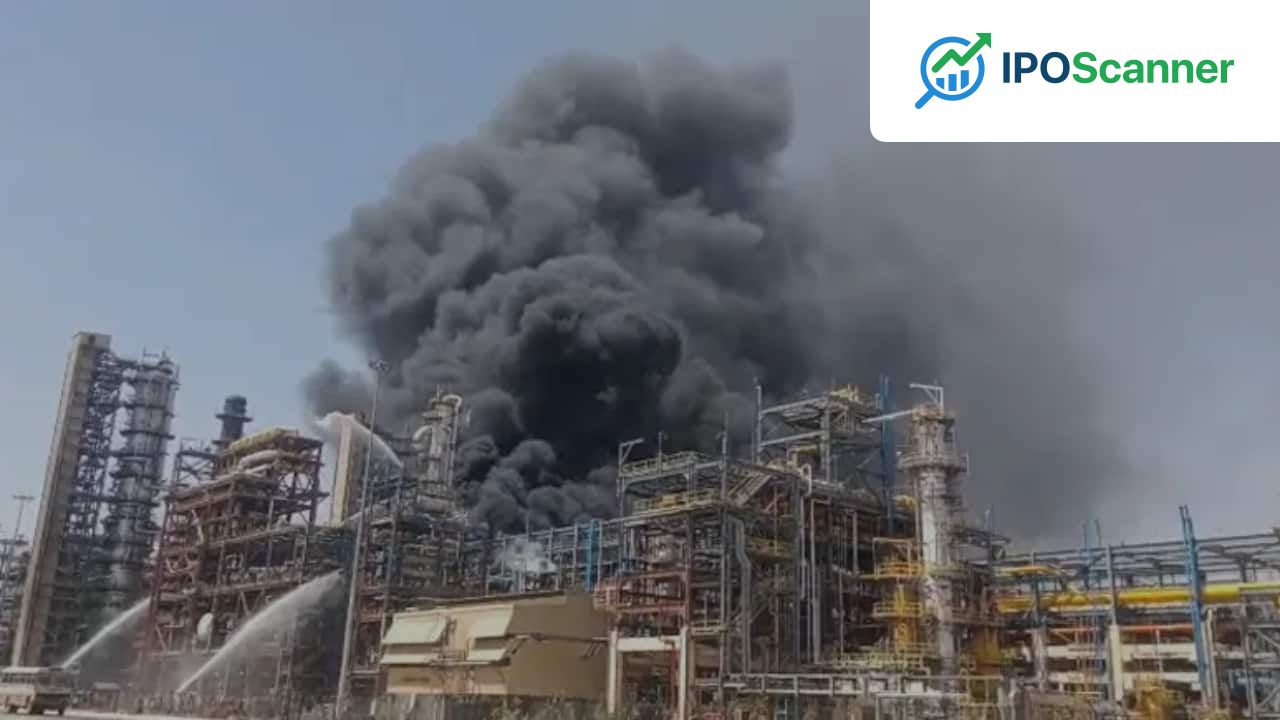
A major fire broke out on April 20 at the newly built Rs 79,450-crore refinery of HPCL Rajasthan Refinery Ltd in Rajasthan, just a day before the scheduled inauguration by Prime Minister Narendra Modi. The fire in the crude distillation unit, the main unit of a refinery, was likely caused by a hydrocarbon leak from a valve or flange in a heat exchanger circuit.
According to a stock exchange filing by Hindustan Petroleum Corporation Limited (HPCL), a detailed investigation into the incident confirmed that the fire was localized to the heat exchanger stack, impacting six exchangers and associated equipment. The restoration work is in progress and is expected to be completed within three to four weeks, with the crude distillation unit restart likely in the second half of May.
Trial production of key fuels, including LPG, petrol, diesel, and naphtha, is expected to begin within May, followed by stabilisation and full commissioning of the units. The scheduled April 21 dedication of the refinery has been postponed, with a revised date to be announced.
Read also: NTPC Targets Rs 25,000 Crore Nuclear Power Project in Bihar's Banka
The Ministry of Petroleum and Natural Gas has instituted a separate inquiry into the incident, with former MRPL Managing Director M Venkatesh leading a four-member probe team.
| Refinery | Complexity Index | Processing Capacity (Barrels per Day) |
|---|---|---|
| HPCL Rajasthan Refinery Ltd | N/A | 180,000 |
| Reliance Industries Ltd's Jamnagar Refinery | 21.1 | 1,240,000 |
Refineries worldwide are highly susceptible to fires, explosions, and catastrophic failures during the commissioning and startup phases, as this period involves introducing hydrocarbons into new or maintained high-pressure, high-temperature systems.
The Rajasthan refinery, a joint venture between HPCL and the Government of Rajasthan, is designed as a 9 million tonnes per annum facility with a strong petrochemical focus, reflecting India's strategy to boost value-added output and reduce import dependence. It features a Nelson Complexity Index of 17 and petrochemical yields exceeding 26 per cent, aligning with global benchmarks for efficiency and sustainability.
Read also: Bayer's US Supreme Court Case: Implications for Roundup Litigation
Once operational, the complex will produce fuels, including petrol and diesel, along with petrochemicals such as polypropylene, polyethylene variants, and key industrial chemicals like benzene and butadiene. These products are widely used across sectors ranging from transportation and packaging to pharmaceuticals and construction.
The refinery project was scheduled to begin commercial operations from July 1, according to a Government of India statement issued on April 8, announcing approval of the Union Cabinet to enhance the cost of the project. This is not the first time a fire has broken out at a refinery under commissioning. On January 30, 2016, a major fire broke out at Indian Oil Corporation's (IOC) Paradip refinery's atmospheric vacuum unit (AVU), just over a week before its scheduled inauguration by Prime Minister Modi on February 7, 2016. No injuries were reported even then.
The Rajasthan refinery will be India's 24th and the second most complex unit yet in India. HRRL is a joint venture between HPCL, which holds a 74 per cent stake, and the Government of Rajasthan with the remaining 26 per cent.
Investor Takeaway
Investors should monitor the situation closely for any potential impact on HPCL's operations and financials.
More in Economy
NTPC Targets Rs 25,000 Crore Nuclear Power Project in Bihar's Banka

Bayer's US Supreme Court Case: Implications for Roundup Litigation

Gold and Silver Prices Remain Volatile as US-Iran Tensions Escalate